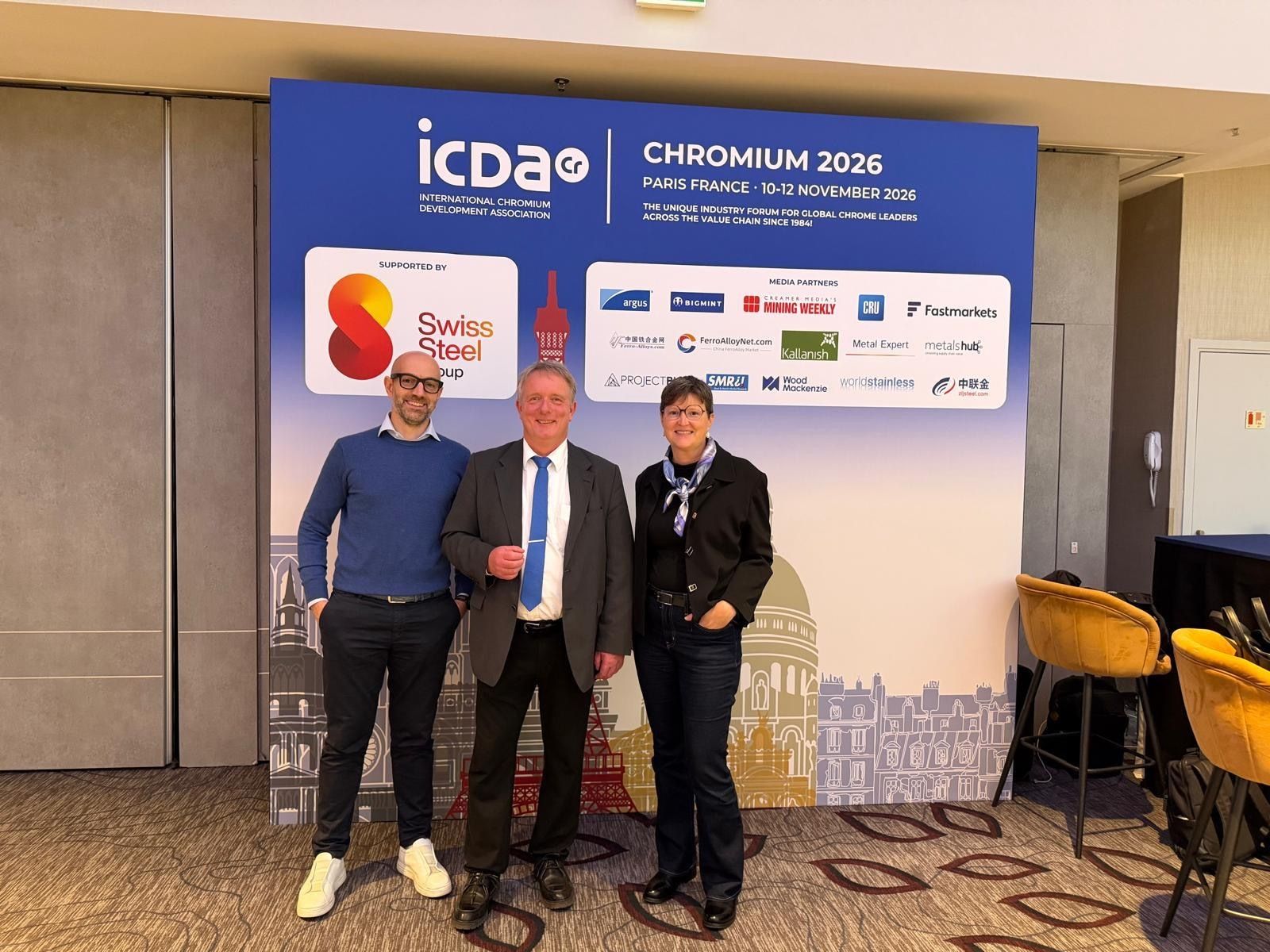
At the 2026 ICDA meeting, CETS joined the International Chromium
Development Association for a workshop on EU regulatory developments affecting chromium trioxide (CrO₃) and surface treatment.
We brought together colleagues from across the chromium value chain to discuss what a potential shift from REACH authorisation to restriction could mean for companies that use chromium trioxide. CETS was represented by board members Malte Zimmer and Anne-Sophie Maze and our coordinator, Marco Passeri.
The workshop examined three proposed restriction scenarios for hexavalent chromium (Cr(VI)), with different limits for worker exposure, annual air emissions and annual releases to water. We stressed the importance of assessing these proposals against real operating conditions, including what companies can achieve by adapting existing installations and where technically viable alternatives are available.
We also discussed how the proposed PFAS restriction could affect surface treatment. Some facilities use PFAS-based mist suppressants to help control workers’ exposure to Cr(VI). Changes in the availability of these products could affect how companies manage exposure, so the two proposals need to be considered together.
We encourage EU decision-makers to hear directly from the companies that run these processes, including SMEs. Their experience can show how the proposals would affect day-to-day operations, customers and downstream supply network.
Thank you to ICDA and everyone who contributed to the workshop. We look forward to continuing the dialogue. 😉
Connect. Engage. Transform. Strengthen.